
Introduction: The Trap of the Prototype That "Works"
You've spent weeks building your MVP. AI helped you go fast — Lovable, Bolt.new, Cursor. You have a working interface, some enthusiastic beta users, and encouraging feedback. You feel the time has come to move to the next step.
But this is exactly where many projects derail.
Companies launching production without a structured roadmap lose on average 6 to 9 months and between €50,000 and €150,000 building features users don't want — or worse, fixing technical problems that could have been anticipated.
An MVP that "works" in demo and a product ready for production are two fundamentally different realities. The good news: the path between them is marked, provided you know it.
Prototype vs MVP vs Production: The Three Levels to Distinguish
Before going further, clarifying terms is essential, as many confuse these stages to their project's detriment.
The Prototype
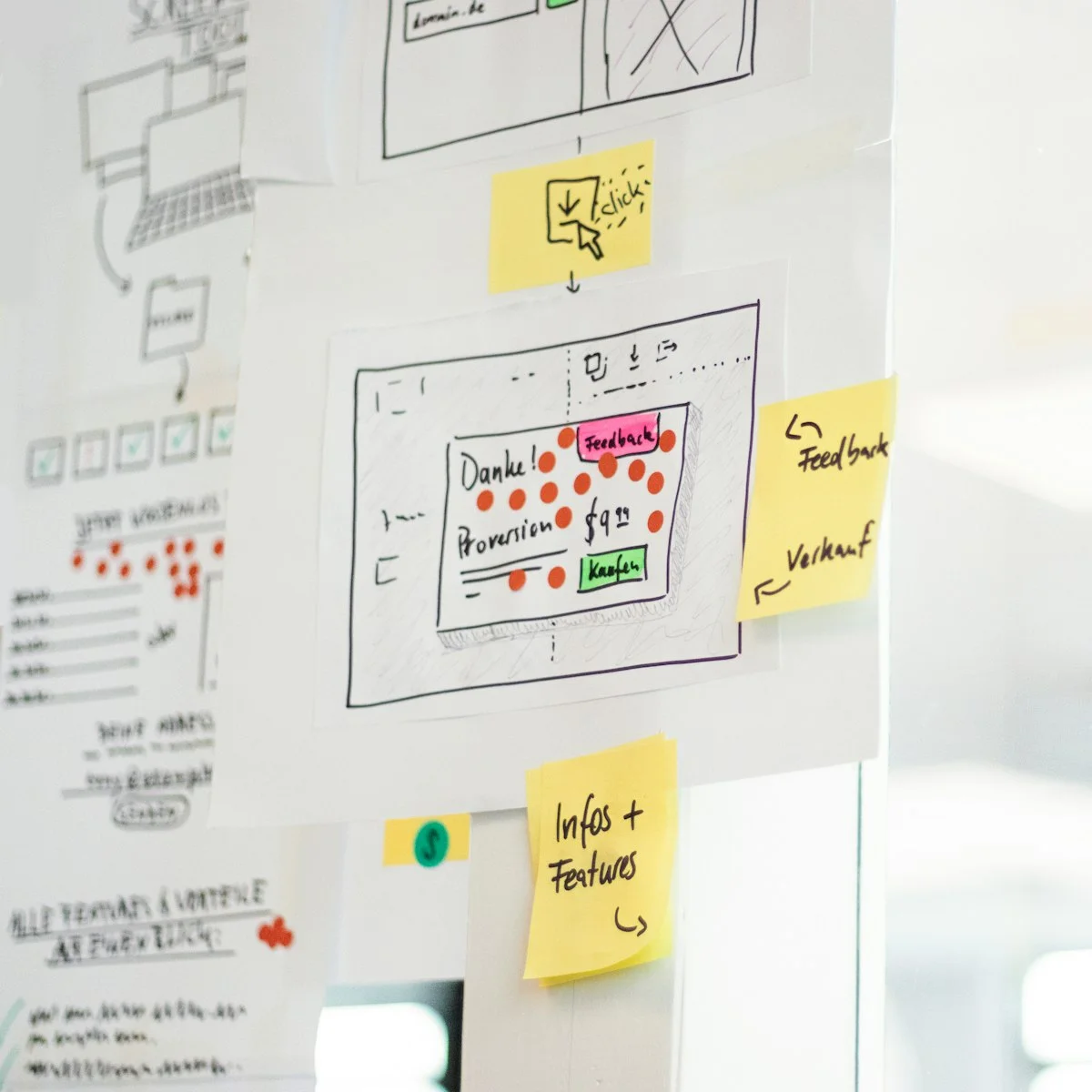
A prototype is a mockup — often non-functional or partially functional — serving to visually test an idea. It validates a user flow, interface or concept without having to build anything. AI tools like Lovable or V0 excel at creating convincing prototypes in hours.
Usage: internal validation, investor presentation, qualitative user testing.
The MVP
The Minimum Viable Product is a functional product — with real data, real business logic and real users — but reduced to its essential expression. A good MVP has 3 to 5 core features solving a specific problem, and not one more.
In 2026, the average MVP cost has dropped to about €9,000 thanks to AI tools, vs €15,000 in 2024. But this democratization doesn't mean quality is guaranteed.
Usage: market validation, first user acquisition, real feedback collection.
Production
A product in production must support real volumes, users who haven't been briefed, unexpected behaviors, load spikes, and security threats. It must be stable, maintainable, scalable and compliant.
This is where code rapidly generated by AI shows its limits — and where professional expertise becomes indispensable.
The 5 Reasons Why MVPs Don't Scale
1. Architecture Not Designed for Growth
Vibe coding produces code that works now, not code that will work with 10,000 users. Improvised monolithic architectures become impossible to evolve without complete redesign.
2. Zero Observability
You can't improve what you don't measure. Most MVPs are deployed without product analytics, error monitoring, or alerts. When it breaks, you learn from an unhappy user on Twitter.
3. Security as Afterthought
45% of AI-generated code contains critical security vulnerabilities. In MVP, that's acceptable. In production with your customers' data, it's not.
4. Poorly Managed Dependencies
AI tools readily use third-party packages without evaluating their maintainability, security or compatibility with the rest of the stack.
5. No Deployment Process
Deploying manually by copy-pasting files to a server is the recipe for production disasters. Without automated CI/CD, each deployment is a leap into the void.
The Roadmap: From Your MVP to Production
Phase 1 — Technical Audit (weeks 1-2)
Before building anything, evaluate your codebase's real state:
What to audit:
- Code quality and structure (existing technical debt)
- Current test coverage
- Dependencies and their versions (obsolete or vulnerable packages)
- Initial security score (SAST / DAST)
- Baseline performance (response times, bundle sizes)
- GDPR compliance and data management
This audit's verdict will determine if you can industrialize existing code or if partial refactoring is necessary.
Phase 2 — Base Solidification (weeks 3-6)
This is the least glamorous but most critical phase. It consists of reinforcing everything sacrificed to go fast.
Automated tests: unit on core logic, integration on critical flows (authentication, payment, irreversible actions), end-to-end on main user journey.
CI/CD pipeline: each commit automatically triggers tests, security analysis, and staging deployment. Manual deployments no longer exist.
Security baseline: HTTPS everywhere, secrets in dedicated manager (AWS Secrets Manager, 1Password), RBAC, input validation, rate limiting.
Monitoring & alerts: Sentry for errors, Datadog or Grafana for technical metrics, PostHog or Amplitude for user behaviors.
Phase 3 — Optimization for Scale (weeks 7-10)
Once the base is solid, prepare your product to grow:
Database: indexing frequent queries, cache strategy (Redis), schema migration management without downtime.
Cloud infrastructure: moving from "sufficient" hosting to scalable infrastructure (auto-scaling, load balancing, CDN).
Front-end performance: optimized Core Web Vitals, lazy loading, asset compression, code splitting.
Infrastructure cost: with well-designed architecture, a serious product's infrastructure cost starts at ~€50/month (Vercel + Supabase) and scales properly.
Phase 4 — Soft Launch (week 11)
Don't go directly from "nothing" to "everyone". Soft launch consists of progressively opening your product:
- Closed beta group (50-100 users): detect critical bugs in real conditions
- Enhanced monitoring: watch every metric, every error
- Fast feedback loop: iterate in days, not weeks
- Readiness criteria defined upfront: when are you ready for full opening?
Your MVP is ready for full launch when: it clearly solves the core problem, users complete the main action without assistance, critical bugs are resolved, and your analytics tools are in place.
Phase 5 — Continuous Improvement Loop
Production isn't a finish line, it's a rhythm. The best-performing teams follow a structured weekly cycle:
- Monday: review of previous week's metrics and feedback
- Tuesday: prioritization of 3 main improvements
- Wednesday–Friday: implementation and tests
- Friday: deployment with enhanced monitoring
When to Industrialize Yourself, When to Call an Expert?
Industrialize in-house if: you have an experienced technical team, your product is simple and not sensitive, your MVP is reasonable technical quality.
Call an expert if: your product handles sensitive data, your MVP was entirely AI-generated without technical review, you're targeting rapid growth, you've suffered security incidents, or you have technical debt but not resources to address it.
70% of projects fail due to lack of user acceptance. It's not so much code that fails as the strategy surrounding the code. Professional support for moving to production is first and foremost managed risk.
Conclusion: Speed is an Advantage, Rush is a Risk
AI tools have made prototyping accessible to all. It's a revolution. But they've also made skipping steps more tempting — and the steps you skip today become the incidents you manage at 3am in 6 months.
✅ A technical audit before scaling ✅ Automated tests on critical flows ✅ A CI/CD pipeline deploying without surprises ✅ Monitoring before the first real user ✅ A soft launch before full opening
The path from prototype to production isn't a sprint, it's a sequence. And each step counts.
Ready to Industrialize Your Product?
At NexIT, we support teams in moving from prototype to production: technical audit, AI code refactoring, test and CI/CD setup, scalable and secure architecture.
Your idea deserves better than an MVP that breaks at the first load spike.
Camille Beaucher — Your partner to industrialize your AI projects with rigor and efficiency.
Request an audit of your MVPDiscover our mobile app services
Sources
- MVP Development Roadmap Guide 2026 — wearepresta.com
- How Much Does It Really Cost to Build an MVP in 2026? — Medium/SpeedMVPs
- MVP Tech Stack Guide 2026 — Medium/Cabot Technology
- The MVP Checklist for 2026 — thesoftix.com
- MVP App Development Service Trends 2026 — coditi.com
- AI Coding Impact 2026 Benchmark Report — Opsera
- Veracode 2025 GenAI Code Security Report