
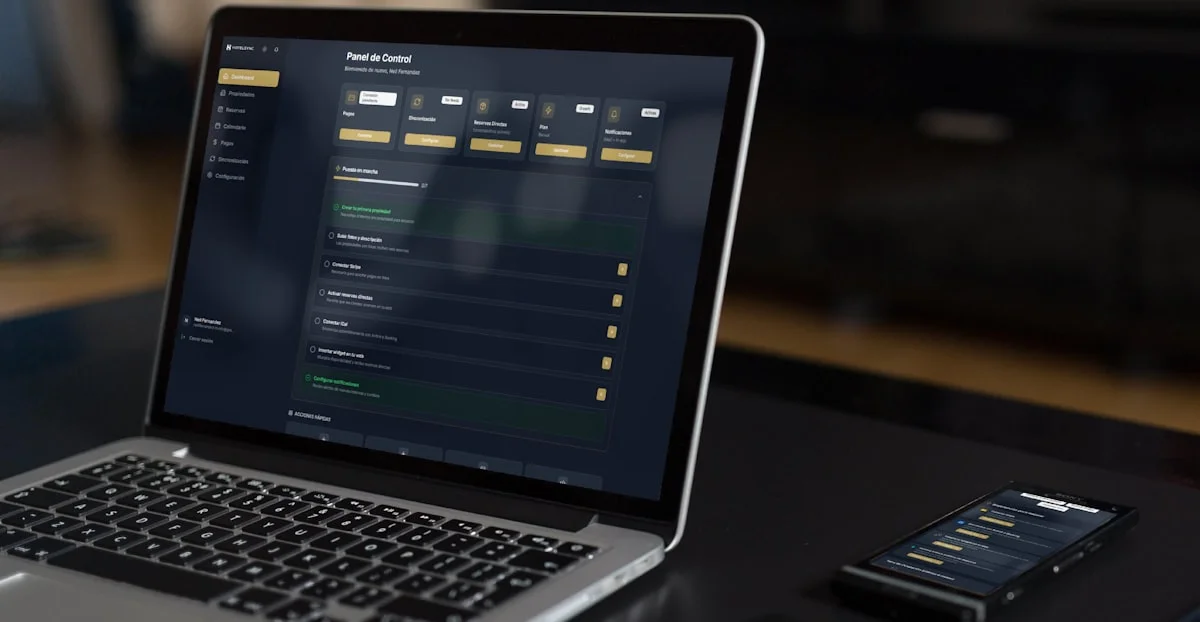
An eco-friendly website is, first of all, a lightweight website
An eco-friendly website uses fewer resources to deliver the same service: fewer bytes transferred, fewer scripts executed, less energy on the server side and on the device side. Digital technology accounts for about 4% of France's national carbon footprint in 2022 according to Arcep, the French telecoms regulator, and that footprint could triple between 2020 and 2050 without action.
Page weight is the easiest lever to measure. The median mobile home page on the web weighs 2.6 MB in 2025 according to the HTTP Archive Web Almanac. Ours weigh between 290 and 710 KB. Here is how, and what these figures don't prove.
What "eco-friendly" means, and what it doesn't
The term isn't a label. It covers eco-design practices whose official French framework is the RGESN, the general framework for eco-design of digital services, published by Arcep and Arcom in its version 2 in May 2024. It covers nine families of criteria, from strategy and specifications through to the frontend, the backend and hosting (Numérique écoresponsable).
Two precautions keep you from falling into greenwashing:
- Don't confuse weight with carbon. A lightweight site uses less data, but its real footprint also depends on the host, the electricity used and visitors' devices.
- Only claim what can be measured. Writing "eco-friendly website" with no figure is a promise, not information.
The 5 levers that matter most
1. Light, properly sized images
Images are the biggest source of weight on most pages. Serve them in modern formats (WebP, AVIF), at the size actually displayed, and load them only when the visitor sees them. Our site is configured to serve its images in WebP and AVIF.
2. Little JavaScript
Every script has to be downloaded, parsed and executed by the visitor's device. Remove unused libraries, load heavy features (maps, animations, widgets) only where they're needed, and avoid page builders that bring in dozens of files.
3. Few fonts and no automatic content
Limit yourself to one or two font families, with a small number of weights. Ban autoplaying video and carousels that load dozens of invisible images.
4. Suitable hosting and caching
A static site, or one cached on a content delivery network, avoids recomputing every page on every visit. The choice of host matters too: ask what it communicates about its electricity and energy efficiency, rather than accepting a generic pitch. See our article on web hosting for small businesses.
5. A durable site, and therefore a maintained one
A site you have to rebuild every three years because it has become unmanageable costs more, financially and environmentally, than a simple site you keep up. Maintenance is an eco-design lever in its own right.
Our measurements: what our pages weigh
We measured three pages of nex-it.fr in production on September 21, 2026, using a Chromium browser in mobile emulation, cold load, no scrolling. The weight is the bytes actually transferred (compressed).
| Page | Transferred weight | Requests | Versus the mobile median (2,559 KB) |
|---|---|---|---|
| Home page | 352 KB | 43 | about 7 times lighter |
| "Website creation in Le Mans" page | 289 KB | 33 | about 9 times lighter |
| Blog article (example: website costs) | 708 KB | 47 | about 3.6 times lighter |
A Lighthouse report run in June 2026 on the home page, in mobile simulation, gave a total weight of 380 KiB, a performance score of 94 out of 100 and an LCP of 2.3 seconds. These measurements are consistent with each other: the home page stays under 400 KB.
What these measurements don't say
- They don't measure CO₂. We haven't calculated any emissions: weight is an indicator of sobriety, not a carbon footprint.
- They don't cover hosting. Our site is hosted with Netlify, and we haven't assessed the host's energy source.
- They only count the initial load. Content loaded after scrolling or an interaction isn't included, as in most published measurements.
- The comparison is an order of magnitude. The Web Almanac median covers millions of home pages, with a method that is close to ours but not identical.
These limits are the reason we write "lightweight site" and not "carbon-neutral site."
How to measure your own site's weight
Three minutes is enough.
- Chrome, Network tab in the developer tools: open the page, reload without cache, and read the "transferred" total at the bottom of the list.
- PageSpeed Insights: the diagnosis lists images that are too heavy and unused scripts.
- Compare with the median: 2.6 MB for a mobile home page in 2025. Above that, your page is heavier than the web average.
This approach matches that of our website audit checklist, which also checks the performance thresholds.
Eco-friendly and fast: the same job
Making a site lighter generally makes it faster, and speed is a Google criterion. The "good" thresholds for Core Web Vitals are an LCP of 2.5 seconds or less, an INP of 200 milliseconds or less and a CLS of 0.1 or less (web.dev). Fewer heavy images and fewer scripts improve all three metrics, and your visitors' comfort along with them, especially on mobile and with an average connection. We detail the link with search rankings in our article on design and SEO.
Five questions to ask your provider
- What is the target weight of the home page, and how will it be measured?
- Will images be served in modern formats and at the right size?
- Which third-party scripts (analytics, chat, social media) will be loaded, and are they necessary?
- Where is the site hosted, and what does the host know about its energy consumption?
- Who maintains the site after launch, so it doesn't become obsolete?
Frequently asked questions
What is an eco-friendly website?
A site designed to use fewer resources: light pages, few scripts, optimized images, suitable hosting and ongoing maintenance. In France, the RGESN published by Arcep and Arcom (2024 version) is the reference for these practices.
Does an eco-friendly website cost more?
Not necessarily. A lightweight site is often simpler to build: fewer superfluous features, fewer plugins, fewer dependencies. Any extra cost comes from a requirement to measure and optimize, not from sobriety itself.
Is a page's weight enough to measure its impact?
No, it's one indicator among others. The real footprint also depends on the hosting, the energy used and visitors' devices. Weight remains the easiest to measure and reduce, and it correlates with loading speed.
Why does a lighter site load faster?
Because the browser downloads and processes less data. Images and scripts are the main contributors: reducing them improves the time it takes for the main content to appear, and therefore the performance metrics Google tracks.
Conclusion: measure before you say it
An eco-friendly website is recognized by figures, not a slogan: page weight, number of requests, embedded scripts, choice of host. Our pages weigh between 290 and 710 KB against a web median of 2.6 MB, but we claim nothing about carbon, because we haven't measured it.
✅ Measure the weight of your home page on mobile ✅ Serve your images in WebP or AVIF, at the right size ✅ Remove unneeded scripts and plugins ✅ Ask your host about its energy ✅ Only claim what you can put a figure on
A lightweight, fast site, designed from the start
At NexIT, we build sites that are lightweight, fast and maintained over time. Describe your project: we'll reply within 24 hours with a free quote.
Sources
- L'empreinte environnementale du numérique — Arcep
- Page Weight, 2025 — Web Almanac, HTTP Archive
- Référentiel général d'écoconception de services numériques (RGESN), 2024 — Numérique écoresponsable
- Web Vitals — web.dev (Google)
- NexIT measurements of September 21, 2026 (Chromium, mobile emulation, cold load) and Lighthouse report of June 22, 2026