
A specific memory: searching Google while pedaling
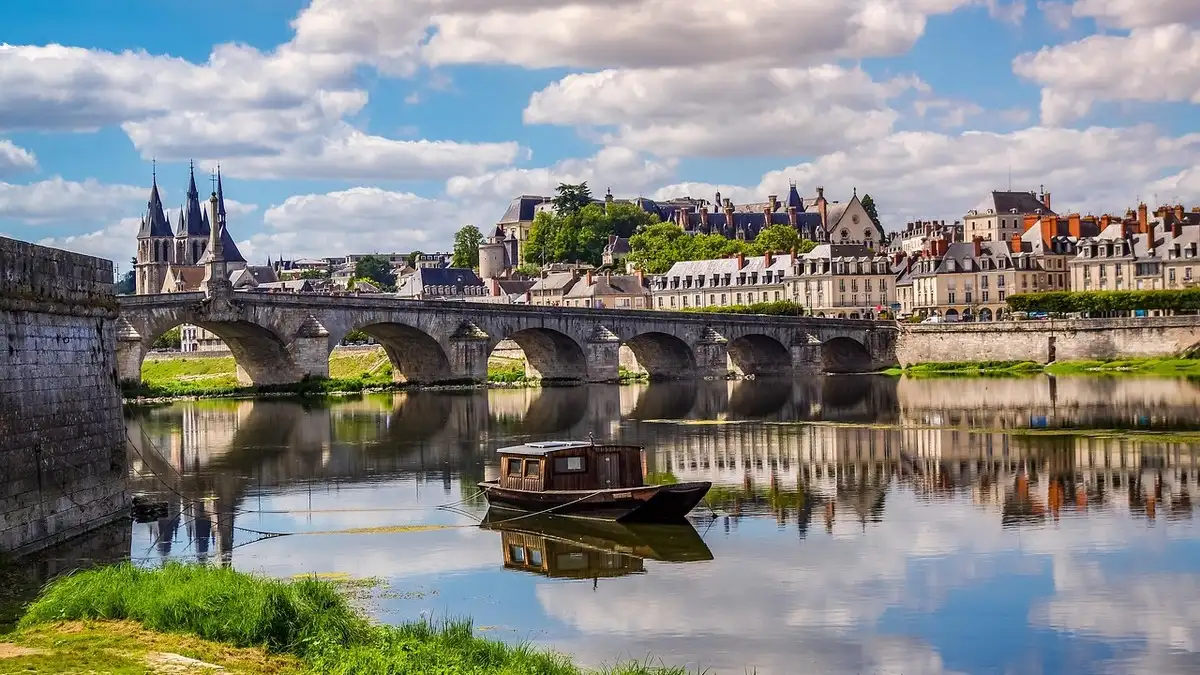
I rode La Loire à Vélo several times when I was younger, between Beaugency and the area around Chambord. Those are some of my best memories of this region — the wind, the poplar trees, the châteaux appearing around a bend in the path.
What I also remember, very precisely, is stopping at the edge of the trail, pulling out my phone, and searching Google for anything interesting nearby: a bakery, a cellar to visit, somewhere to eat, a riverside café. And sometimes I rode off having found nothing — even though what I was looking for might have been two streets away.
That memory became, years later, one of the reasons I now help Loire Valley shops with their online presence. If a cyclist searches and finds nothing, your shop doesn't exist for them — even if it's 200 meters away.
La Loire à Vélo isn't a minor tourist detail
La Loire à Vélo isn't a small, anecdotal bike path. A joint study by the Centre-Val de Loire and Pays de la Loire regions counted 1.8 million cyclist crossings on the route, generating €54.5 million in local economic impact (regional La Loire à Vélo study, 2022 edition, published 2023). Among these cyclists, 54% are tourists, and 20% of those come from abroad — customers who don't know your shop through local word of mouth, and who discover everything, literally, on their phone.
The route runs directly through Beaugency, Meung-sur-Loire, Muides-sur-Loire and Saint-Laurent-Nouan, with Chambord a few kilometers away from the trail. A shop located on or near this route has a level of passing traffic that many businesses elsewhere in France simply don't have — provided it can be found at the moment that traffic passes its door.
How a cyclist actually searches
The decision is made in seconds, not planned weeks in advance
A cyclist on La Loire à Vélo doesn't plan every stop weeks before setting off. They're riding, they get hungry, thirsty, or feel like a break, and they search on the spot — often stopped, at the side of the path, with mobile signal that isn't always great. If your shop doesn't show up in the first two or three results, they keep riding toward whatever does.
They're searching for very concrete information
Is it open right now? Can you park with a bike or panniers? Is there a terrace? Can you refill a water bottle? These are practical details, not marketing — and they're exactly what an outdated listing doesn't tell you.
A Google listing alone doesn't tell your story
A well-filled Google Business profile is necessary — it's what gets you onto the map and into "near me" searches. But it doesn't replace a website that shows what you sell, who you are, and why it's worth stopping at your place rather than 500 meters further on. That's where the difference is made, especially for a shop without an already-known name.
What a real website actually changes
You don't need a sophisticated e-commerce site to capture this traffic. What matters, in order:
- Being visible on Google Maps and in local search, with accurate opening hours — nothing more frustrating for a cyclist than stopping in front of closed shutters when the listing said "open."
- A simple site showing the essentials: what you offer, photos that make people want to stop, and an easy way to find or contact you.
- A site that loads fast on mobile, with sometimes weak signal out in the countryside — a heavy site is a customer who gives up before the page finishes loading.
This isn't about local search volume — as I explain in my article on why I travel across the Loire Valley, the towns in this area are small. It's about capturing, at the right moment, passing traffic that already exists and is actively looking for somewhere to stop.
Who this is most useful for
This matters most for shops located on or near the route — bakeries, cafés, restaurants, wine merchants, bike rental shops, campsites, gîtes, riverside cafés, local produce sellers. If you're in Beaugency, Meung-sur-Loire, Muides-sur-Loire or Saint-Laurent-Nouan and you regularly see cyclists ride past without stopping, it's often simply because they don't know you're there.
What I actually offer:
- Website creation — a simple, mobile-fast site built for a customer who decides in seconds
- Google listing optimization — up-to-date hours, photos, practical information for passing cyclists
Conclusion: a customer already searching, right outside your door
I'm not saying the web will replace word of mouth or local reputation — both still matter. But I know, from having ridden that exact same path myself, that a shop invisible online loses part of that traffic without even realizing it. The customer was there, phone in hand, ready to stop — and they rode on to somewhere else.
If you're a shop owner, craftsperson or accommodation provider on or near La Loire à Vélo, I'd like to understand your business and see what makes sense for you.
Let's talk about your project
Book a callSee the dedicated Loire Valley page
NexIT — Camille Beaucher, web agency based in Le Mans, traveling by appointment across the Loire Valley.