
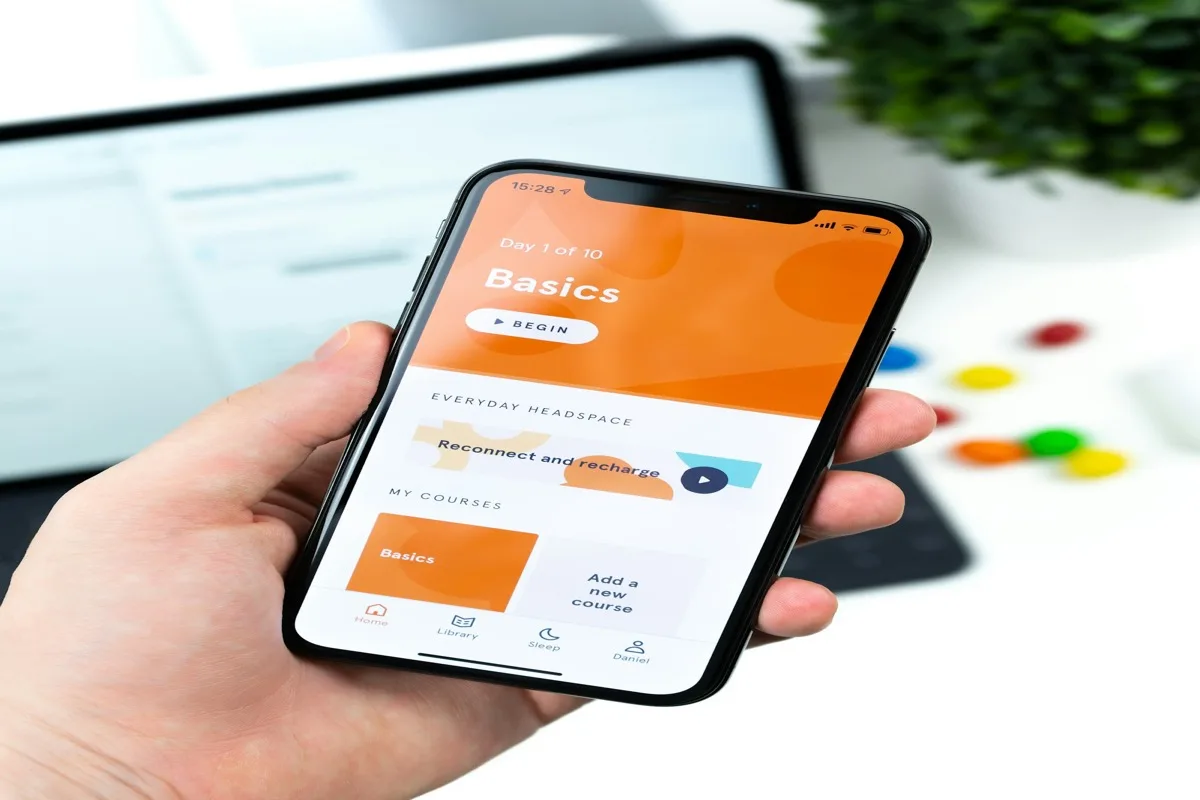
Mobile now accounts for 80% of time spent online in France
According to Médiamétrie's "L'Année Internet 2025" study, mobile now accounts for 80% of time spent online in France, and 91% of French people aged 12 and over own a smartphone (Baromètre du numérique 2025, CREDOC/ARCEP). For an SME in Le Mans or Sarthe, the question isn't really "should we have a mobile presence" anymore — it's "in what form": a responsive website, a Progressive Web App, or a native app to download from the stores.
This guide covers the technical choices, the real budget, the development process, and publishing on the App Store and Google Play.
Native, cross-platform, or PWA: which one fits your project?
You have three options, each with very different trade-offs. Separate native development (Swift for iOS, Kotlin for Android) delivers the best performance and full access to device features, but multiplies the budget by 1.5 to 2 since you're funding two separate builds. Cross-platform (Flutter, React Native) lets you ship one codebase for both platforms, cutting cost by 30-40% versus native, with performance that's now very close to native for the vast majority of business use cases.
A Progressive Web App (PWA) — a website that behaves like an app, installable without going through the stores — costs noticeably less but doesn't get full access to native features (push notifications are limited on iOS, and there's no store presence). On the projects we run in Le Mans, this is the question we ask before talking budget at all: most "we want an app" requests actually resolve perfectly well with cross-platform, and some with a PWA — pure native stays the exception, reserved for well-identified hardware or performance needs.
For a Sarthe SME with a standard need (catalog, booking, loyalty program, order tracking), cross-platform covers the vast majority of cases without sacrificing the user experience.
How much does a mobile app cost in Le Mans in 2026?
Budgets observed on the French market in 2026 break down by complexity tier: a simple app (catalog, a handful of screens, no complex backend) runs €8,000 to €20,000; an MVP to validate an idea before going further, €10,000 to €40,000; a business application with a custom backend and user accounts, €25,000 to €80,000; a complex application (integrated payments, advanced geolocation, real-time features), above €80,000.
On top of the development budget come costs people often forget: the Apple Developer account at $99/year, the Google Play Console account at a one-time $25, and annual maintenance (bug fixes, updates tied to new iOS and Android versions), which typically runs 15-20% of the initial cost.
iOS, Android, or both?
With cross-platform development, "iOS or Android" matters less for development cost — one codebase covers both — but it's still relevant for your publishing strategy. The Apple Developer Program costs $99 a year, versus a one-time $25 for Google Play Console, with no recurring fee. Apple also runs a stricter review process (longer validation times, more rigid design guidelines), while Google Play is generally faster to approve updates.
In practice, for an SME targeting a local Sarthe customer base, publishing on both stores from launch is still the right call: your customers aren't evenly split between the two ecosystems, and restricting the app to one platform mechanically excludes part of your audience.
The development process, step by step
A well-run mobile app project follows a structured path. The discovery phase (1-2 weeks) clarifies goals, priority features, and MVP scope. Prototyping produces interactive mockups to validate the user experience before a single line of code is written — the cheapest stage at which to fix a bad idea. Development runs in two-week sprints with regular demos, typically over 6-10 weeks for an MVP. Testing covers both operating systems and several device generations, since an app that runs perfectly on a recent iPhone can behave differently on an entry-level Android device.
Publishing on the stores: what to know
Publishing isn't instant. Apple subjects every app to a manual review that can take anywhere from 24 hours to several days, and regularly rejects submissions over guideline issues (an incomplete privacy policy, a feature that looks like a disguised website, a visible bug found during testing). Google Play's review is generally faster but just as strict about declaring what data the app collects.
Build in a 1-2 week buffer before your target launch date to absorb a possible rejection and resubmission — it's the most common planning mistake on this type of project.
What if a simple PWA were enough?
Not every good idea justifies a native app. If your main need is a better mobile experience of content you already have — no critical push notifications, no heavy use of the camera or GPS, no need to be visible on the stores — a Progressive Web App, or even a well-built responsive website, often meets the need at a fraction of the budget. The question to ask mirrors the one we cover for custom software: the math should be about what the app genuinely delivers, not the appeal of having "an app."
Le Mans and Sarthe: real-world use cases
In the Sarthe context, the mobile app projects that work best answer a precise need: a local shop in Le Mans running a loyalty program with promotion notifications, a home-services business letting clients track an appointment in real time, or a construction company equipping field teams with an offline data-entry app that syncs as soon as connectivity returns on site.
Checklist before starting your mobile app project
- Have you confirmed the need justifies a native app rather than a PWA or responsive site?
- Do you know whether cross-platform covers your needs, or whether specific features require native?
- Does your budget cover development, developer accounts, and annual maintenance?
- Have you built in time for store review before your launch date?
- Do you have a plan for updates tied to new iOS and Android versions?
Conclusion: a successful mobile project starts with the right questions
A mobile app in Le Mans is worth it when the need is real, the scope is clear, and the budget matches the project's actual complexity. Cross-platform covers most cases at a controlled cost; native stays reserved for very specific performance or hardware-access needs; and a PWA can be enough if the goal is mainly a better mobile experience, not a store presence.
✅ Technical choice (native, cross-platform, PWA) matched to the real need ✅ Budget covering development, developer accounts, and maintenance ✅ Time buffer built in for Apple and Google review ✅ Presence on both stores from launch, unless there's a specific reason not to
Let's talk about your mobile app project
At NexIT, we support businesses in Le Mans and Sarthe from scoping through store publication — always starting by checking that an app is actually the right answer to your need.
Camille Beaucher — Founder of NexIT, web agency in Le Mans.
Request an assessment of your projectDiscover our mobile app service